


Best Educational Activities for 3-Year-Olds at Home

Last Updated: October 23, 2026
Quick Summary
Educational activities for 3-year-olds combine fun with learning through play, exploration, and hands-on discovery using everyday household materials. Puzzles, sensory play, fine motor activities, and dramatic play build essential skills like problem-solving, coordination, and early math concepts without requiring expensive toys or structured lessons.
Large wooden puzzles with 4-8 pieces and sorting games develop spatial reasoning and categorization skills.
Sensory play with rice, beans, water, and household items builds hand strength and fine motor control.
Most activities should last 10-20 minutes, matching three-year-olds' limited attention spans.
Reading aloud and casual number talk throughout daily routines build literacy and numeracy skills naturally.
Keep materials visible and accessible so children initiate learning independently during free play.
Table of Contents
Play-Based Learning Activities for 3-Year-Olds
Puzzles and Sorting Games
Sensory Play with Household Materials
Low-Prep Activities for Toddlers Using What You Have
Color Matching and Sorting
Water Play and Pouring Practice
Fine Motor Activities for 3-Year-Olds
Stringing, Threading, and Pegboard Play
Drawing, Painting, and Mark-Making
Screen-Free Activities for Toddlers That Teach
Reading Together and Number Talk
Dramatic Play and Pretend Games
Building Skills Through Everyday Learning
Kitchen Activities and Cooking Together
Modeling Clay and Creative Construction
How Long Should Activities Last?
Creating a Routine That Supports Learning
Conclusion
Frequently Asked Questions
Play-Based Learning Activities for 3-Year-Olds
The best educational activities for 3-year-olds combine fun with learning. At this age, children learn through play, exploration, and hands-on discovery. The key is choosing activities that feel like play to your child, not structured lessons.

Three-year-olds thrive when they can touch, manipulate, and explore materials. They're developing problem-solving skills, fine motor control, and early math concepts without realizing it. The activities below work at home with minimal prep and everyday materials.
Puzzles and Sorting Games
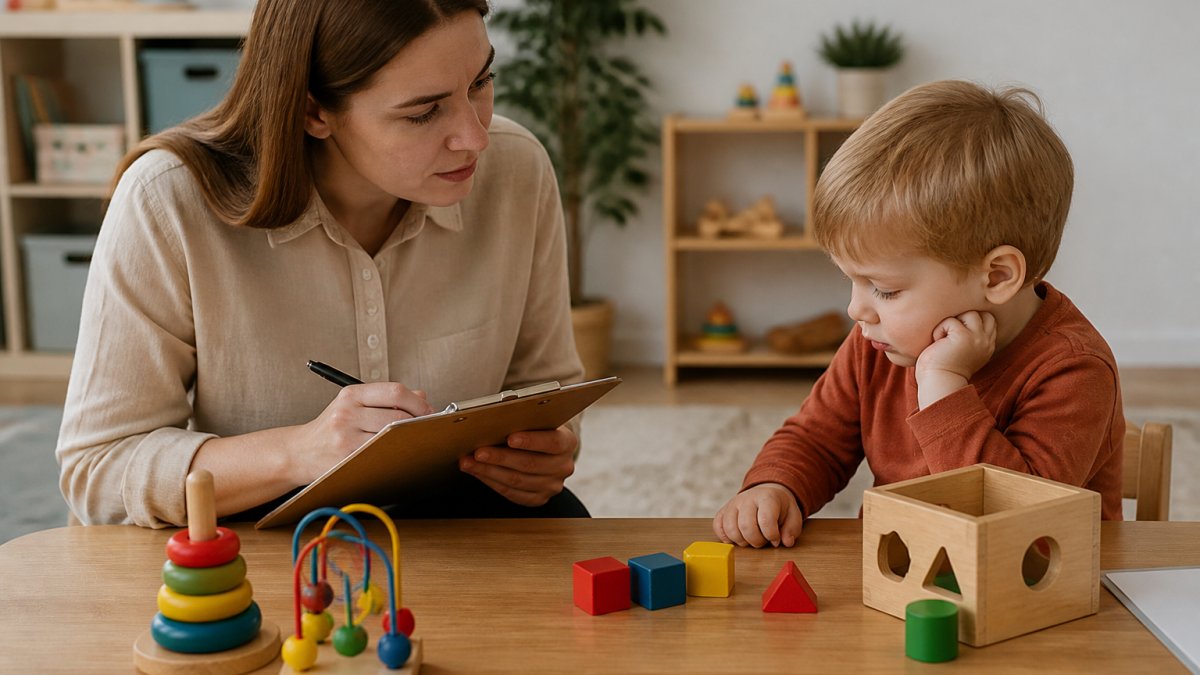
Puzzles are one of the most effective educational activities for 3-year-olds. Large wooden puzzles with 4-8 pieces are ideal, they're big enough to handle and rewarding to complete. As your child practices fitting pieces into spaces, they're learning spatial reasoning and persistence.
Sorting games take puzzle skills further. Use a muffin tin or egg carton and ask your child to sort items by color, size, or type. Try sorting buttons, blocks, pompoms, or toy animals. This develops categorization skills that support early math and reading readiness.
Pro Tip Keep puzzles and sorting activities visible in a low basket or shelf. When children see materials at eye level, they're more likely to choose them independently during free play.
Sensory Play with Household Materials
Sensory play engages multiple senses and keeps toddlers occupied for extended periods. Fill a shallow bin with uncooked rice, dried beans, or kinetic sand. Add scoops, funnels, cups, and spoons. Your child will pour, scoop, and transfer materials, building hand strength and coordination.
Water play is another sensory favorite. Fill a bin or sink with water and provide cups, strainers, sponges, and plastic containers. Let your child pour, squeeze, and explore. Sensory play like this calms anxious toddlers while developing fine motor skills.
Safety note: Always supervise sensory activities. Choose materials appropriate for your child's age and avoid anything small enough to be a choking hazard.
Low-Prep Activities for Toddlers Using What You Have
You don't need expensive toys or special materials to create educational activities for 3-year-olds. Your kitchen and living room already contain everything needed for meaningful learning.
Color Matching and Sorting
Gather items around your home in different colors: socks, blocks, toys, books, and pillows. Create piles by color and ask your child to sort items into matching groups. This builds color recognition and categorization, foundational skills for reading and math.
Use clothespins on a rope or string. Paint or color clothespins in different colors, then clip them to a basket or container. Your child practices fine motor control while matching colors. This activity works especially well for children who like to clip, grab, and manipulate objects.
Water Play and Pouring Practice
Fill cups with water and let your child pour from one container to another. Provide funnels, strainers, and measuring cups. Pouring develops hand-eye coordination and introduces early math concepts like full, empty, and more.
Add food coloring to water for extra visual appeal. Freeze small toys in ice cubes and let your child pour warm water to "rescue" the toys. This combines sensory exploration with cause-and-effect learning.
Fine Motor Activities for 3-Year-Olds
Fine motor skills, using small hand muscles to manipulate objects, are essential for writing, eating, and self-care (the CDC). Targeted fine motor activities for 3-year-olds build the strength and coordination needed for these tasks.
Stringing, Threading, and Pegboard Play
Stringing large beads onto yarn or string develops hand-eye coordination and bilateral coordination (using both hands together). Use beads large enough that your child can't swallow them. Start with thick yarn or string, which is easier to thread.
Pegboard play offers similar benefits. Provide a pegboard with large pegs and let your child push pegs into holes. This builds hand strength and precision. Many children find pegboards deeply satisfying and will repeat the activity for long stretches.
Drawing, Painting, and Mark-Making
Crayons, markers, and paintbrushes are essential tools for fine motor development. Set up a low table with paper and art supplies. Let your child scribble, draw, and paint without pressure to create recognizable images.
Offer different tools: chunky crayons, thin markers, paintbrushes, and sponges. Different tools require different grips and hand positions, building varied fine motor skills. Tape paper to the wall or table so your child can draw at different angles.
Key Takeaway The goal of art activities isn't a finished product, it's the process of mark-making and exploration. Praise effort and discovery, not the final result.
Screen-Free Activities for Toddlers That Teach
Screen-free activities keep your child engaged while developing real-world skills. These activities build focus, creativity, and problem-solving without digital devices.
Reading Together and Number Talk
Reading aloud is one of the most powerful educational activities for 3-year-olds. Choose books with repetitive text, bright illustrations, and simple stories. Point to pictures, ask questions, and let your child turn pages.
Incorporate number talk throughout your day. Count stairs as you climb them. Count toys as you put them away. Notice numbers on signs, clocks, and doors. This casual, everyday approach to numbers builds numeracy skills naturally.
Dramatic Play and Pretend Games
Dramatic play, pretending to be doctors, teachers, shopkeepers, or parents, develops social skills, language, and creativity. Set up a pretend kitchen, store, or doctor's office using household items. Provide props like empty food containers, play money, or toy medical tools.
Join in the play occasionally. Model language and ideas: "I'm buying apples at the store. How much do they cost?" This scaffolds your child's learning while keeping play child-led and fun.
Building Skills Through Everyday Learning
The best educational activities for 3-year-olds happen during daily routines. Cooking, cleaning, and playing outside all offer learning opportunities.
Kitchen Activities and Cooking Together
Cooking with your child builds math skills (measuring, counting), science knowledge (how ingredients change), and fine motor skills (stirring, pouring, mixing). Choose simple recipes: no-bake cookies, fruit smoothies, or decorated crackers.
Let your child do as much as safely possible. They can wash vegetables, tear lettuce, stir ingredients, and arrange toppings. Cooking together also builds vocabulary and introduces concepts like temperature, texture, and taste.
Modeling Clay and Creative Construction
Play dough and modeling clay offer endless creative possibilities. Your child can roll, squeeze, pinch, and shape clay, building hand strength and fine motor control. Provide tools like rolling pins, cookie cutters, and plastic knives.
Building with blocks, boxes, and recycled materials develops spatial reasoning and engineering thinking. Stack boxes to make towers. Arrange blocks in patterns. Use paper towel tubes and tape to build structures. These activities teach problem-solving and persistence.
How Long Should Activities Last?
Three-year-olds have limited attention spans. Most activities should last 10-20 minutes. Watch your child's cues. When interest drops, move to something new rather than pushing to continue.
Some children focus longer on preferred activities. If your child loves puzzles, they might stay engaged for 25-30 minutes. Other children prefer variety and need activity changes every 10 minutes. Flexibility matters more than rigid timing.
Offer activities multiple times. Your child might ignore an activity today but love it tomorrow. Building skills takes repetition, so revisit favorite activities regularly.
Creating a Routine That Supports Learning
Consistency helps children feel secure and ready to learn. Establish a simple routine with regular times for play, meals, outdoor time, and rest.
Include dedicated time for educational activities for 3-year-olds. This might be 30-45 minutes after breakfast or before lunch. Set up 2-3 activity options and let your child choose. Rotating activities weekly keeps things fresh.
Keep materials accessible. When puzzles, art supplies, and sensory bins are visible and easy to reach, your child initiates learning independently. This self-directed play is some of the most powerful learning that happens.
Premier Kids Academy families in Lyndhurst know that learning at home complements classroom experiences. When parents and teachers work together, children develop stronger skills and confidence. Our collegiate-based curriculum supports what you're doing at home, and activities you try here reinforce what children learn in our classrooms.
Best For Families in Lyndhurst and the surrounding area who want to extend learning beyond the classroom while keeping activities simple and screen-free.
Conclusion
The best educational activities for 3-year-olds are simple, playful, and repeatable. You don't need expensive materials or complicated lessons. Puzzles, sensory play, fine motor activities, and everyday learning moments build essential skills while keeping your child engaged and happy.
Start with one or two activities this week. Watch what captures your child's interest. Build from there. Most importantly, have fun together. Play is how three-year-olds learn best.
At Premier Kids Academy, we combine these home-based strategies with our exclusive collegiate-based curriculum and advanced technology programs. Our teachers are trained to recognize each child's unique learning style and interests, creating personalized experiences that build confidence and academic readiness. If you're looking for a center in Lyndhurst that extends this play-based approach with professional developmental support, Premier Kids Academy's comprehensive early learning programs offer the expertise and care your family deserves. Apply now to learn how we support your child's growth through individualized teaching and enrichment activities like our Young Entrepreneur Program and gymnastics.
Frequently Asked Questions
What are the best educational activities for a 3-year-old at home?
The best educational activities for a 3-year-old combine play with learning. Puzzles, sorting games, sensory play, fine motor activities like stringing and drawing, and pretend play all support development. Activities using household items, rice, water, clothespins, and blocks, work well and require minimal prep. Reading together, cooking, and modeling clay also build skills naturally. The key is choosing activities your child enjoys so they stay engaged and learn through play.
How can I teach my 3-year-old through play-based learning activities?
Play-based learning happens when you follow your child's interests and let play guide the teaching. Offer puzzles and sorting toys to build problem-solving skills. Use sensory materials like rice or water for exploration. Ask open-ended questions during play: 'What color is that?' or 'Can you stack these higher?' Read books together and point out numbers and letters in everyday life. The goal is to make learning feel like fun, not a lesson.
What low-prep activities for toddlers can I do with items I already have at home?
Many excellent activities require nothing more than household supplies. Try clothespin color matching, water play with cups and spoons, sorting objects by color or size, building with blocks or boxes, drawing with crayons or markers, and playing with modeling clay. You can also fill containers with uncooked pasta or rice for sensory exploration, or use painter's tape on the floor for movement games. These activities are low-mess, require no special materials, and support multiple learning areas.
How long should educational activities last for a 3-year-old?
Three-year-olds typically have attention spans of 5 to 15 minutes per activity, though this varies by child and interest level. Start with shorter sessions and watch your child's cues. If they lose interest, it's time to switch activities or take a break. Offer a variety of activities throughout the day rather than one long session. Some children will stay engaged longer with activities they love, so follow their lead and don't force participation.
How can I keep my 3-year-old engaged in screen-free activities for toddlers?
Screen-free engagement comes from hands-on play and interaction. Rotate toys and activities to keep novelty high. Offer sensory experiences like water play, painting, and modeling clay. Read books together daily and point out pictures and letters. Play pretend games, build with blocks, and do simple cooking activities together. Your involvement matters most, children stay engaged longer when a parent or caregiver plays alongside them. Mix structured activities with free play to maintain interest throughout the day.
Apply Now
Add premierkidsacademy.org as a preferred source on Google →

Comments