


8 Toddler Fine Motor Skill Exercises That Build Grip and Coordination

Last Updated: November 15, 2026
Quick Summary
Toddler fine motor skill development exercises build the small hand and finger movements children need for writing, feeding themselves, and dressing. Hands-on exercises like crumpling paper, stacking blocks, peeling stickers, and squeezing playdough train the pincer grasp, hand strength, and hand-eye coordination that worksheets cannot build.
Keep toddler fine motor sessions short, around five to ten minutes, with frequent low-pressure practice.
Around 18 months, toddlers typically scribble with a fist grip and stack two to three blocks.
Start with large beads and size down only as your child's control improves.
If an item slides inside a cardboard toilet-paper tube, it is too small for unsupervised toddler play.
Talk to your pediatrician if your child avoids grasping small objects past 18 months.
Ready to build your toddler's skills?
Premier Kids Academy offers hands-on learning and caring teachers for children ages 3 weeks to 14.
Table of Contents
Why Toddler Fine Motor Exercises Matter More Than Worksheets
Fine Motor Skills Milestones for 2-Year-Olds: What to Expect
Fine Motor Activities for 2- and 3-Year-Olds That Add Challenge
Safety, Supervision, and Choking-Risk Guidance for Caregivers
Adapting Exercises for Different Abilities and Sensory Preferences
When to Seek Professional Guidance on Fine Motor Development
Why Toddler Fine Motor Exercises Matter More Than Worksheets
Toddler fine motor skill development exercises build the small hand and finger movements children need for writing, feeding themselves, and dressing. Children who practice real, hands-on movement build the dexterity that writing and self-care require.
Here is the core problem with worksheets. A worksheet asks a toddler to hold a pencil before the hand muscles are ready. That builds frustration, not skill. Fine motor development is a physical process. The fingers need to pinch, squeeze, grip, and release real objects before they can control a pencil.
The exercises below work because they meet toddlers where they are. Each one targets a specific skill, and most use items you already own.
The Skills Behind the Exercises
Every activity in this guide trains one or more of five core abilities. Knowing them helps you see progress that a worksheet would hide.
Pincer grasp: picking up small objects between thumb and index finger
Hand strength: squeezing, pinching, and gripping against resistance
Hand-eye coordination: guiding the hand to a target the eyes are watching
Bilateral coordination: using both hands together, one to hold and one to act
Finger isolation: moving one finger at a time
Fine motor skills are the small, precise movements of the hands, fingers, feet, and toes, as Cleveland Clinic explains in its overview of fine motor development. Each exercise below maps to one of these skills, so you can pick activities that match what your child needs. For related cognitive skill-building, our team also shares cognitive development activities for 2 year olds that pair well with this work.
Fine Motor Skills Activities for 1- and 2-Year-Olds
Start simple. At this age, the goal is repetition and confidence, not precision.
Crumple paper. Hand your child a sheet of tissue or newspaper and show them how to squeeze it into a ball. This builds hand strength and grip.
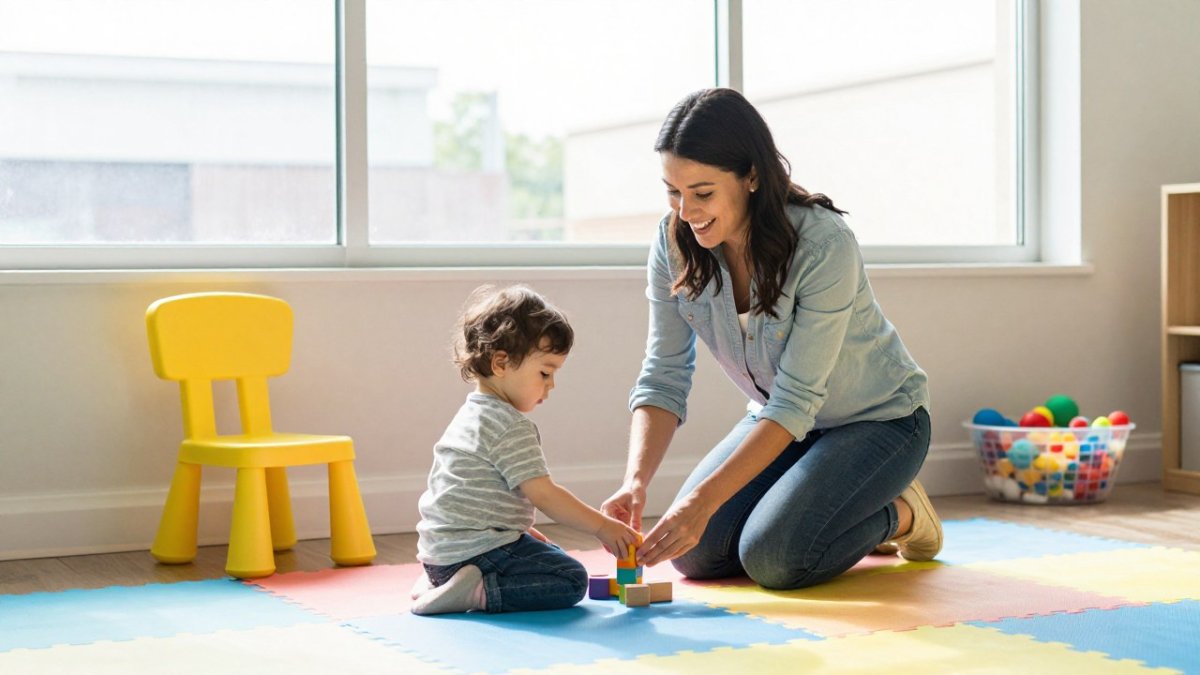
Stack blocks. Soft or wooden blocks teach release control and hand-eye coordination. Knock them down together, then rebuild.
Drop items in a container. A wide-mouth jar and large pom-poms train the pick-up-and-release motion.
Peel stickers. Peeling builds finger isolation and the pincer grasp. Use large stickers at first.
Squeeze playdough. Rolling, flattening, and pinching dough works the whole hand.
Keep sessions short, around five to ten minutes. Toddlers learn through frequent, low-pressure practice.
Fine Motor Skills Milestones for 2-Year-Olds: What to Expect
Milestones are useful as a loose map, not a scorecard.
Around 18 months
Scribbles spontaneously with a crayon held in a fist
Stacks two to three blocks
Picks up small items with a raking grasp, moving toward a pincer grasp
Turns thick board-book pages with help
Uses both hands to hold a container while the other hand reaches in
Exercises that fit: crumpling paper, stacking soft blocks, dropping large pom-poms into a wide-mouth jar, and squeezing playdough.
Around 24 months
Stacks four to six blocks
Uses a pincer grasp to pick up small items between thumb and index finger
Turns single pages of a board book
Scribbles with more control and begins to imitate vertical lines
Uses a spoon with some success and helps push an arm through a sleeve
Around 30 to 36 months
Stacks six or more blocks and builds simple horizontal trains
Holds a crayon with a more mature grip, moving from a fist toward a tripod hold
Snips paper with safety scissors, often with two-handed help at first
Strings large beads with supervision
Screws and unscrews large lids and manages buttons with help
Exercises that fit: stringing large beads, snipping strips of paper, drawing and coloring, simple puzzles, and clothespin pinching.
A common pattern is that hand strength and grasp control develop before precise finger isolation.
Watch out: milestone charts can create unnecessary pressure.
Here is a practical age-banded picture of what most toddlers are working on, and which exercises in this guide support each skill.
Age | What to expect | Exercises that fit |
Around 18 months | Scribbles with fist grip; stacks two to three blocks | Crumpling paper, stacking soft blocks, dropping large pom-poms, squeezing playdough |
Around 24 months | Stacks four to six blocks; uses a pincer grasp | Peeling large stickers, tongs to transfer pom-poms, knob puzzles, thick crayons |
Around 30 to 36 months | Stacks six or more blocks; moves toward a tripod hold | Stringing large beads, snipping paper strips, drawing and coloring, clothespin pinching |
Fine Motor Activities for 2- and 3-Year-Olds That Add Challenge
Older toddlers are ready for more control. These exercises add precision without adding pressure.
String large beads. Threading trains hand-eye coordination and bilateral coordination. Hold the bead with one hand and the string with the other.
Use tongs to transfer. Child-safe tongs and large pom-poms build grip strength and control. Move items from one bowl to another.
Cut with safety scissors. Start with snipping strips of paper. Cutting teaches the open-close hand motion and finger isolation.
Draw and color. Thick crayons and short coloring sessions build pencil skills and visual-motor integration.
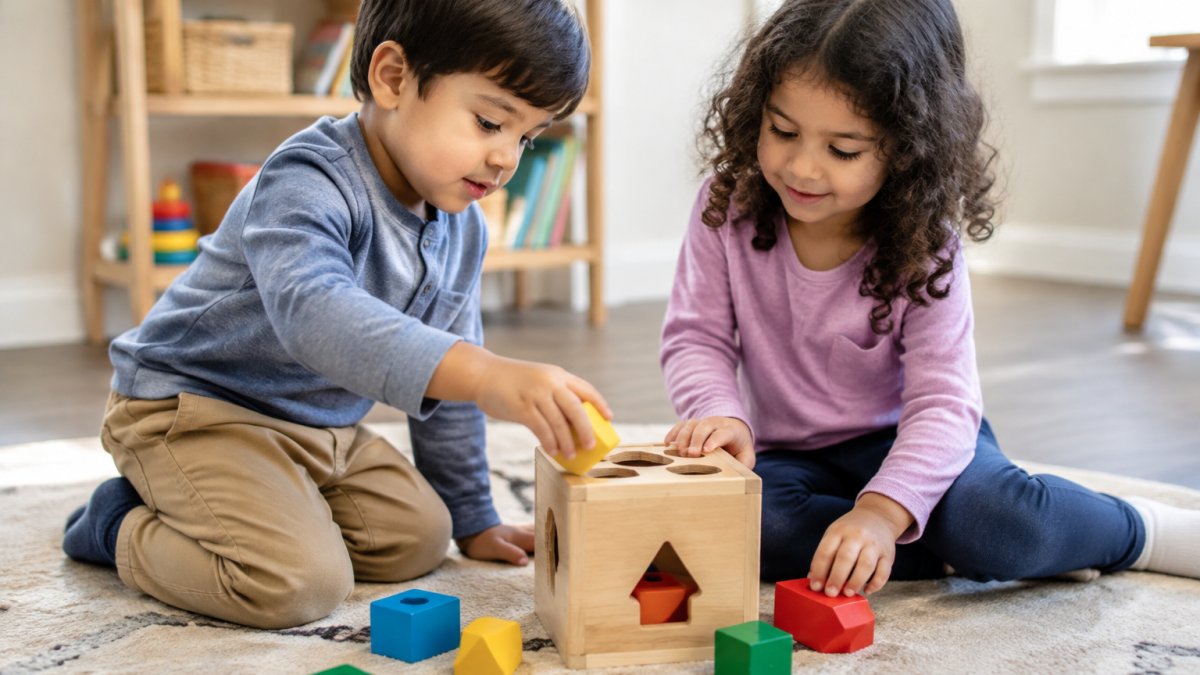
Work simple puzzles. Puzzles with knobs train the pincer grasp and problem-solving at once.
A common mistake is jumping to small beads too soon. Start large and size down as control improves. For more at-home ideas that keep building these skills, see our guide to the best educational activities for 3-year-olds at home.
Toddler Fine Motor Activities at Home With Everyday Items
You do not need special toys. Most of these exercises use what is already in your kitchen or junk drawer.

Clothespins: pinching them open builds finger strength
Containers and lids: screwing lids on and off trains wrist rotation
Buttons and zippers: practice on real clothing builds self-care skills
Spray bottles: squeezing the trigger works the whole hand
Rice or water play: scooping and pouring build coordination
These everyday activities fit into a normal day. Play-based learning like this is exactly why hands-on practice beats seatwork for toddlers, which we explain in our look at whether play-based learning benefits are worth it for toddlers.
Safety, Supervision, and Choking-Risk Guidance for Caregivers
Small objects are the biggest risk in fine motor play, and the reason is mechanical: a young child's airway is narrow, and objects that fit inside a cardboard toilet-paper tube can lodge there. A common household gauge for young children is the toilet-paper-tube test.
Follow these rules every time:
Supervise closely during any activity with small items, and keep the child within arm's reach
Choose large beads, pom-poms, and blocks for children under three, and check that each item passes the toilet-paper-tube test
Keep buttons, coins, beads, and small toy parts out of reach when play ends, and store them in a latched container or a high cabinet
Check toys and craft materials for loose parts, cracked plastic, or fraying string before each session
Avoid balloons, small magnets, and button batteries entirely; these are among the most dangerous objects for young children
Tie long strings or yarn to a short length when threading, and never loop string around a child's neck
Watch out: a toddler can choke silently within seconds, so keep your eyes on the child, not your phone, during small-object play. Silence is the warning sign, not coughing.
Age-specific substitutions make the exercises in this guide safer without removing the skill practice:
Under 24 months: replace small beads with large wooden beads, chunky pasta, or a threading toy with attached pieces; replace pom-poms with large fabric balls or crumpled paper
24 to 36 months: use large beads and thick yarn with a stiff tip, and stay within arm's reach; replace safety scissors with plastic snippers until the child can open and close them on command
Older toddlers and preschoolers: size down gradually, and only after the child consistently keeps materials out of their mouth
Safety is not a reason to skip these exercises. It is a reason to set them up carefully, and to treat the setup as part of the activity.
Adapting Exercises for Different Abilities and Sensory Preferences
Not every child enjoys the same materials. Some dislike the feel of playdough or the mess of water play. That is normal, and it is easy to adapt.
For sensory sensitivity: offer dry materials like rice or sand before wet ones, and let the child use tools instead of bare hands
For low muscle tone: start with larger, lighter objects and shorter sessions
For a child who avoids mess: try stickers and clothespins, which are clean and contained
For a child who seeks movement: build in bigger actions like squeezing a spray bottle or pounding dough
Meet the child where they are. The skill still develops even when the material changes.
When to Seek Professional Guidance on Fine Motor Development
Most toddlers catch up with practice and time. Some need extra support, and asking for help early is smart, not alarming.
Talk to your pediatrician if your child:
Avoids or struggles with grasping small objects past 18 months
Cannot hold a crayon or scribble by age three
Drops items constantly or seems unable to control hand movements
Shows frustration or distress during hand tasks
A pediatrician or occupational therapist can assess fine motor development and suggest targeted exercises. For a fuller picture of what to watch for, our article on the 10 signs of developmental delays in toddlers walks through the red flags in plain language. In the Lyndhurst area, your pediatrician can also connect you with local early intervention services.
Fine motor development happens through daily practice, not perfect lessons. If you want a setting where your child builds these skills with trained teachers every day, Premier Kids Academy is here.
Frequently Asked Questions
How do I improve my toddler's fine motor skills?
Practice a little every day through play rather than drills. Offer short sessions of pinching, squeezing, threading, and picking up small objects with supervision, like moving pom-poms with tongs or peeling stickers. Rotate materials so the hands meet new challenges. Most toddlers do best with 10 to 15 minutes at a time, several times a day, built into meals, bath time, and outdoor play. If a skill seems stuck for months, talk with your pediatrician about a developmental screening.
What fine motor skills should a 2-year-old be doing?
By around age 2, many toddlers can stack a few blocks, turn book pages, scribble with a crayon, and use a spoon with some success. They often pick up small items with thumb and fingertip, help pull off socks, and try buttons or zippers with help. These are general milestones, not a checklist every child hits on the same schedule. Premature birth, temperament, and practice time all affect timing, so compare your child to their own past progress rather than to a chart.
When should I be concerned about my toddler's fine motor development?
Ask for a professional opinion if your toddler consistently drops objects, avoids grasping, or cannot pick up small items by around 18 months. Other signs include a hand that stays fisted most of the time, strong resistance to touching different textures, or losing skills they once had. Talk with your pediatrician, who can connect you with an occupational therapist or early intervention services. Early support helps, and a screening is simply information, not a diagnosis.
How long should toddlers practice fine motor activities?
Follow your child's attention span instead of a clock. Many 1- and 2-year-olds stay engaged for 5 to 10 minutes, while 3-year-olds may focus for 15 to 20. Short, frequent bursts work better than one long session. Stop when your child loses interest or starts throwing materials, and try again later. Play-based learning during meals, dressing, and bath time counts as practice, so you do not need a separate block of time each day.

Comments