


Creative Problem Solving Games for Toddlers That Build Real Thinking Skills

Last Updated: November 5, 2026
Quick Summary
The best problem solving games for toddlers are simple, cheap, and matched to what your child can already do, such as drop and fetch, stack and knock, and build a bridge. Keep the challenge just past what your child can already do, and let small failures happen so your toddler learns to try again.
The first three years are when the brain builds the most connections it will ever make.
At 18 to 24 months, games should be short and physical, with cause and effect as the goal.
Two-year-olds can handle two-step problems and simple choices like stacking and water transfer.
Give your toddler a few seconds to solve a problem before you jump in.
Rotate materials every week or two so the games feel new.
Table of Contents
Why Creative Problem Solving Games Matter for Toddler Development
A toddler who drops a block into a bucket, misses, and tries again is not just playing. That moment is creative problem solving in its earliest form, and it builds the mental machinery your child will use for every puzzle, conflict, and decision ahead. This kind of play does not require expensive toys.
The first three years are when the brain builds the most connections it will ever make. Games that ask a toddler to reach, sort, stack, or figure out a simple obstacle give those connections something to grip onto. This guide covers the games that work, the ages they suit, and the mistakes that quietly stall progress.
Here is the part most parents miss: the goal is not a correct answer. It is the attempt. Below, we show you exactly how to set up play that rewards trying, not just succeeding.
Toddler Cognitive Development Activities That Double as Games
Toddler cognitive development activities work best when they feel like play, not lessons. A sorting game, a hiding game, a stacking challenge: each one exercises memory, attention, and cause-and-effect thinking without a single flashcard.
Consider what happens during a simple hide-and-seek with a toy. Your child tracks where it went, holds that picture in mind, and searches. That sequence is working memory in action. Stacking cups teach size order and gravity. Matching lids to containers teaches one-to-one correspondence.
The key is to keep the challenge just past what your child can already do. Too easy and boredom wins. Too hard and frustration ends the game. Watch for the moment your toddler pauses and thinks. That pause is the learning.
For a deeper bank of age-specific ideas, our team keeps a full list of cognitive development activities for 2 year olds that pair well with the games .
How to Teach Critical Thinking to Toddlers Through Everyday Play
Learning how to teach critical thinking to toddlers sounds ambitious for a two-year-old. It is not. Critical thinking at this age looks like cause and effect, trial and error, and simple choices. You teach it by narrating, questioning, and stepping back.
Try these habits during everyday play:
Ask "what do you think will happen?" before a tower falls or a ball rolls
Offer two real choices instead of deciding for your child
Let a small failure happen, then ask "what could we try next?"
Describe what you see: "The block is too big for that hole. What else fits?"
Wait. Give your toddler a few seconds to solve before you jump in
That last point matters most. Adults solve toddler problems in a second because we already know the answer. The learning happens in the pause before the answer arrives.
The Benefits of Play-Based Learning for Toddlers
The benefits of play-based learning for toddlers reach well past the play mat. Play builds language, motor control, social skills, and emotional regulation at the same time, because a good game asks for all of them at once.
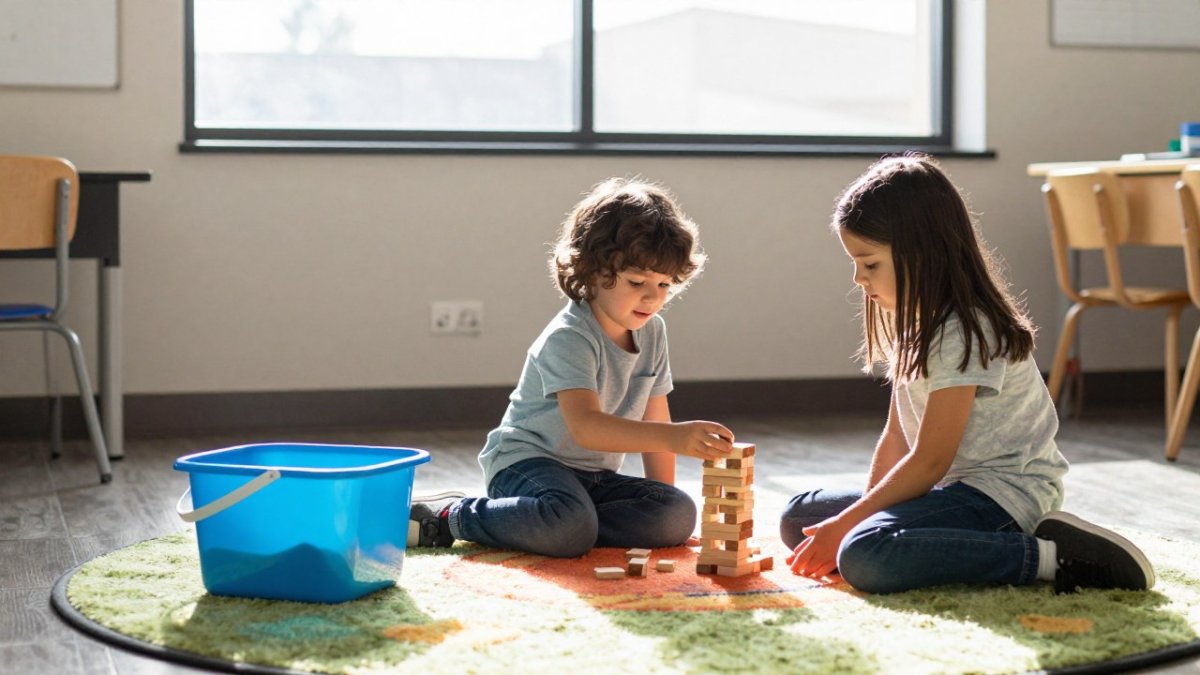
When a child negotiates who gets the red block, that is social problem solving. When a child rebuilds a fallen tower, that is persistence. When a child explains why the puzzle piece does not fit, that is reasoning. None of it feels like a worksheet, and that is the point.
Research on early learning consistently points to play as a foundation for later school success. The National Association for the Education of Young Children's guidance on play describes play as central to how young children learn, not a break from it. If you want the fuller case, our article on whether play-based learning benefits are worth it for toddlers lays out the evidence.
10 Creative Problem Solving Games for Toddlers by Age
The best problem solving games for toddlers are simple, cheap, and matched to what your child can already do. These ten games are grouped by age so you can start where your child is right now.

Games for 18 to 24 Months
At this age, games should be short and physical. The goal is cause and effect.
Drop and fetch. Drop a soft ball into a box and let your toddler retrieve it. Teaches object permanence.
Simple sorter. One hole, one shape. Teaches matching without overwhelming.
Peekaboo toy. Hide a toy under a cloth and ask where it went. Builds working memory.
Games for 2 to 3 Years
Two-year-olds can handle two-step problems and simple choices.
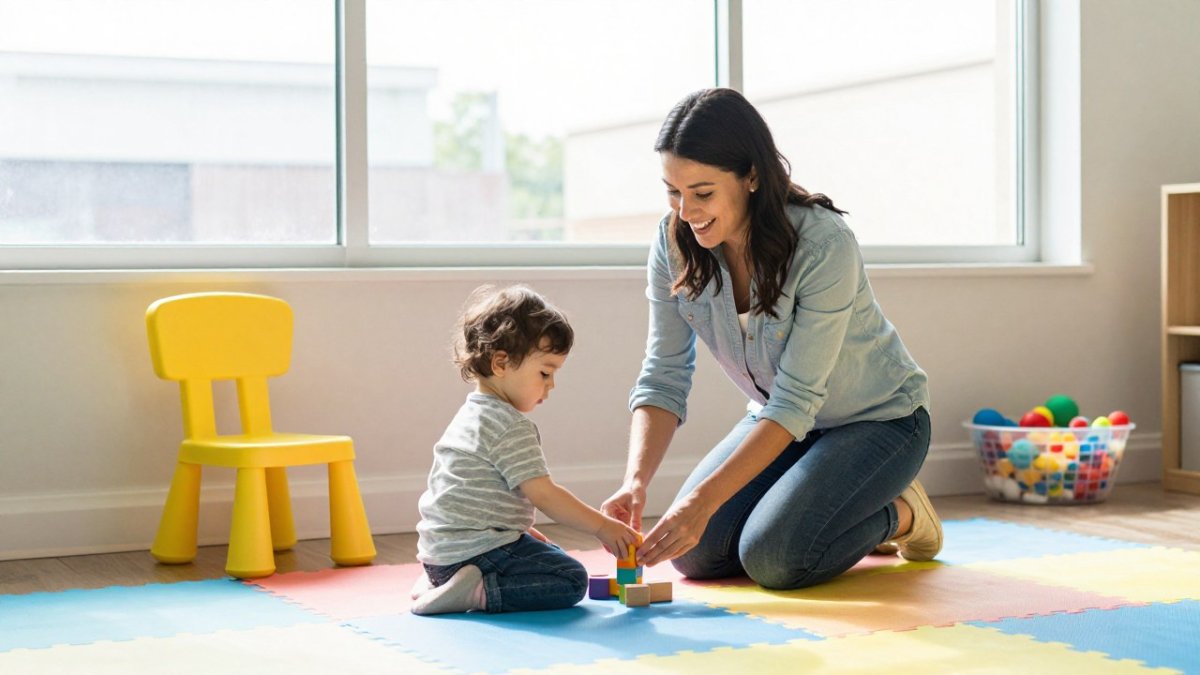
Stack and knock. Build a tower together, then knock it down. Teaches balance and consequence.
Puzzle with knobs. Chunky wooden puzzles with easy grips build spatial reasoning.
Water transfer. Move water from one cup to another with a sponge. Teaches control and cause and effect.
Obstacle path. Line up pillows to climb over, under, and around. Teaches planning.
Games for 3 to 4 Years
Three-year-olds can plan ahead and follow simple rules.
Matching pairs. Turn cards face down and find pairs. Builds memory and turn-taking.
Build a bridge. Ask your child to get a toy across a "river" using blocks. Teaches engineering thinking.
Sorting by rule. Sort toys by color, then by size, then by type. Teaches flexible thinking.
For parents of older toddlers, our collection of educational activities for 3 year olds at home adds more ideas beyond these ten.
Materials and Setup for Problem Solving Games at Home
You do not need a toy store to raise a thinker. Most problem solving games for toddlers run on household items and a little floor space. The setup matters more than the supplies.
Here is what to keep on hand:
Blocks, cups, and containers in varied sizes
Chunky puzzles and shape sorters
A soft ball and a basket
Sponges, cups, and a shallow tray for water play
Pillows and blankets for obstacle paths
Set up a low, safe play zone where your child can move freely. Keep materials within reach and rotate them every week or two so the games feel new. A cluttered room overwhelms; a few well-chosen items invite focus.
The hands-on nature of these setups is not accidental. Our breakdown of the benefits of hands-on learning for toddlers explains why manipulating real objects beats screens for this age group.
Common Mistakes Parents Make When Introducing Logic Games
The biggest mistake with logic games is treating them like tests. A toddler who feels judged stops experimenting, and experimentation is the whole engine of learning here.
Watch for these traps:
Solving it for them. Give your child time to struggle a little before you step in.
Correcting too fast. "No, try this way" shuts down trial and error. Ask a question instead.
Too many pieces at once. Five blocks invite play. Fifty cause scatter and frustration.
Skipping the easy stage. If a game is too hard, drop back a level without apology.
Making it a performance. Resist the urge to quiz. Play alongside your child, not above them.
A common mistake is buying elaborate toys when a cardboard box would do more. Toddlers learn from simple materials they can move, stack, and test.
Building These Skills in a Structured Childcare Setting in Lyndhurst
Structured childcare does not replace home play, but it adds something home cannot always offer: a room full of peers working on the same problem. At Premier Kids Academy, our programs are designed to help each child develop at his or her own level.
Our staff are trained and certified in CPR, First Aid, Communicable Diseases, and Child Abuse Prevention. Our collegiate-based curriculum pairs basic academics with social engagement.
The answer usually comes down to whether the adults let children think. If you want to see what that looks like in practice, explore our programs and see how each level builds on the last.
Frequently Asked Questions
What are the benefits of problem solving games for toddlers?
Problem solving games build working memory, impulse control, and flexible thinking, the three skills researchers group under executive function. When a toddler figures out how to fit a shape into a hole or balance one more block, they practice planning and adjusting in real time. These games also grow language and social skills because children narrate what they are doing and negotiate turns with siblings or classmates. Creative problem solving games for toddlers work best when they are open-ended, so the child does most of the thinking.
How can I teach critical thinking to toddlers without formal lessons?
Skip worksheets and drills. Ask open questions during play, such as what might happen if we stack this block here, and let your toddler test the idea. Offer materials with more than one right answer, like a bin of mixed containers and lids, and give them time to struggle before stepping in. Model your own thinking out loud when something goes wrong. How to teach critical thinking to toddlers comes down to narrating choices and letting natural consequences teach the lesson.
Are there simple ways to introduce logic games to toddlers?
Start with sorting and matching, which are the earliest logic skills. Give a toddler a bowl of mixed socks and ask them to find the pairs, or set out three red blocks and one blue and ask which is different. Simple puzzles with knobs, nesting cups, and shape sorters all count as logic games. Keep sessions short, five to ten minutes, and follow your child's interest. If they walk away, try again another day with a simpler version.
How do problem-solving activities relate to early childhood development milestones?
Toddler cognitive development activities map directly onto milestones pediatricians track, such as stacking two to four blocks by 18 months, sorting shapes by two years, and solving simple puzzles by three. These games also support fine motor control and attention span, which feed into preschool readiness. If you notice a child avoiding all problem-solving play or showing frustration far beyond peers, raise it with your pediatrician. Premier Kids Academy staff observe these milestones daily and share progress with families.
The real test of any game is whether your child keeps trying after a setback. If you want that persistence built into a full day of learning, Premier Kids Academy pairs a collegiate-based curriculum with hands-on play, a safe and natural learning environment, and care for children from 3 weeks to 14 years. Get started with Premier Kids Academy and give your child a place where thinking is the point.
Comments