


9 Social Development Milestones for Preschoolers, Age by Age

Last Updated: November 19, 2026
Quick Summary
Social development milestones in preschool children describe the skills kids build as they learn to play, share, and get along with others. Between ages 3 and 5, most children move from playing alone toward playing with friends. This shift shapes how they handle emotions for years to come.
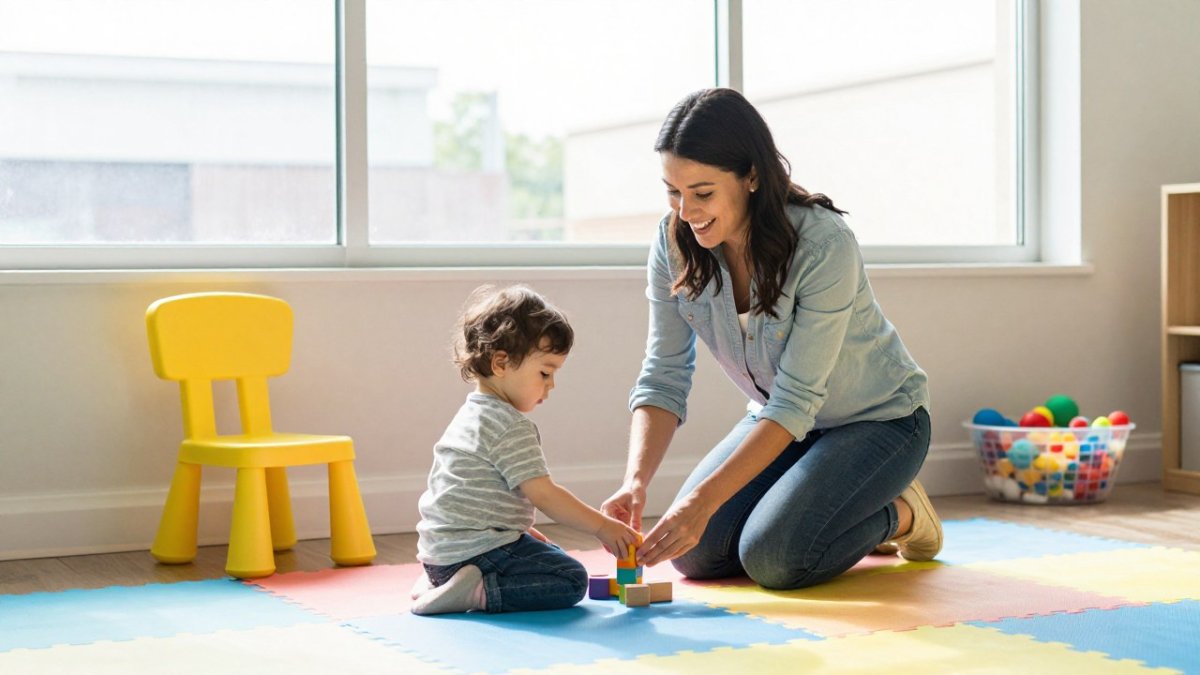
Three-year-olds often play next to other children before playing with them.
By age 4, many children begin to take turns in short games and describe feelings using words.
By age 5, many children choose friends and follow multi-step rules in games.
Use the milestones as guideposts, not pass-or-fail tests, since children develop at different speeds.
If a child shows little interest in other children by age 4, talk with a pediatrician or specialist.
Is your preschooler ready for the next stage?
Premier Kids Academy supports social and emotional growth for children ages 3 weeks to 14 years.
Table of Contents
What Social Development Looks Like in Preschool Years
Social development milestones in preschool children describe the skills kids build as they learn to play, share, and get along with others. Between ages 3 and 5, most children move from playing alone toward playing with friends. This is a major shift, and it shapes how they handle emotions for years to come.
Early childhood programs play a big role here. Parents who know what to expect can support their child at each stage.
Playing beside others: Children play near peers before they play with them.
Taking turns: Simple games start to teach waiting and patience.
Naming feelings: Kids begin to use words for anger, sadness, and joy.
Asking for help: Children learn to go to a trusted adult when stuck.
For more on how preschool settings support these skills, read 7 Ways Early Childhood Education Builds Social Skills.
Social Development Milestones for 3-Year-Olds and 4-Year-Olds
Three-year-olds and four-year-olds develop at different speeds, and the shift from age 3 to age 5 is one of the fastest social leaps in early childhood. Use the bands below as guideposts, not pass-or-fail tests. For the full age-by-age developmental guide, see The Complete Guide to Social Emotional Development Milestones by Age. A child who is late in one area is often right on track in another.
Milestones at Age 3
At age 3, children usually begin to:
Play next to other children, even if they do not play together yet
Show affection toward familiar friends and caregivers
Follow simple classroom routines with some help
Express frustration through crying, yelling, or hitting
Watch other children closely before joining in
Use a favorite toy or comfort object to feel secure in a group
Many three-year-olds still need adult help to share. That is normal at this age. Many three-year-olds respond well when an adult names the turn out loud: "It is Maya's turn, then yours."
Milestones at Age 4
By age 4, many children start to:
Play cooperatively, with simple roles like "you be the doctor"
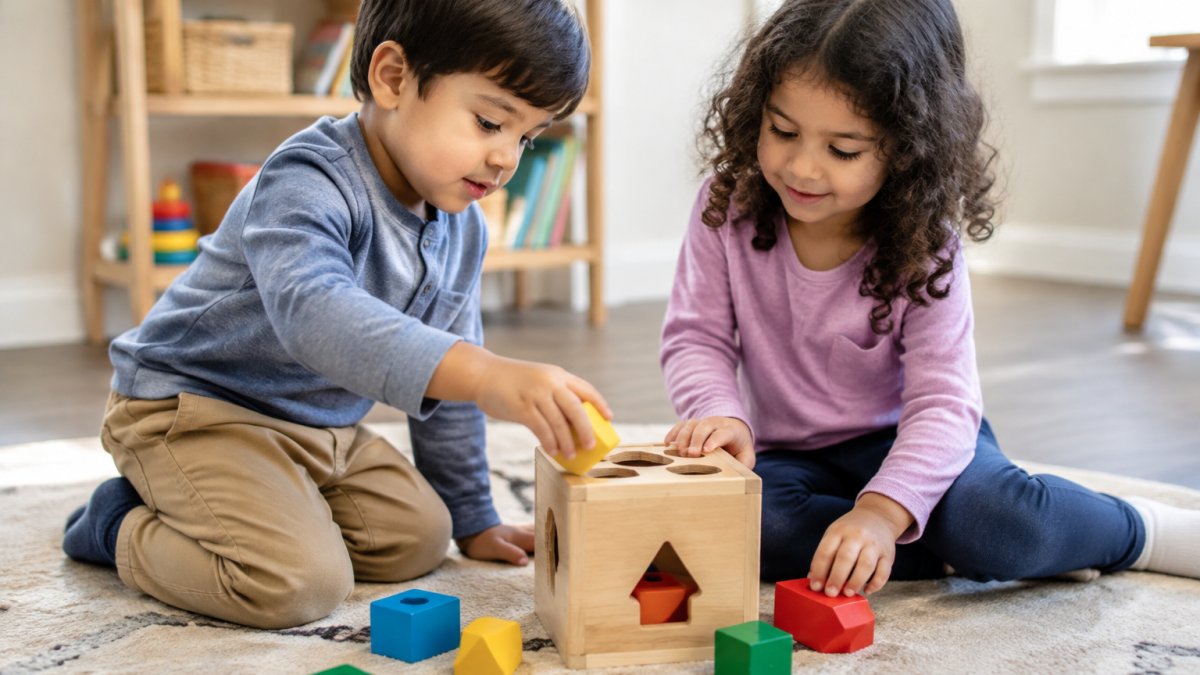
Take turns in short games
Describe feelings using words like "mad" or "sad"
Try to solve small conflicts before asking an adult
Invite a specific friend to play rather than any child nearby
Follow a rule even when the adult is not watching, some of the time
Four-year-olds often enjoy pretend play. This is where many early friendships grow. Four-year-olds often enjoy pretend play, and this is where many early friendships grow.
Milestones at Age 5
By age 5, many children start to:
Choose friends and prefer certain peers over others
Join a group already at play with a simple "Can I play?"
Follow multi-step rules in games like Simon Says or hide-and-seek
Apologize or make amends after a conflict, with a reminder
Accept "not right now" without a full meltdown, most of the time
Protect a friend who is upset or left out
What Shapes the Pace
Temperament, home language, disability, and experience all affect how these skills show up. A shy child may watch for weeks before joining a group and still be developing typically. A child who is learning English may be quiet in a new classroom and talkative at home.
If you want a simple way to track progress across all three years, use the checklist in the next section and review it with your child's teacher every few months.
The article describes how social skills typically shift between ages 3 and 5, so here is a quick scan of the key changes by age.
Age | Typical social skill | Example from the article |
3 | Plays next to other children | Plays alongside peers before playing with them |
3 | Expresses frustration physically | Crying, yelling, or hitting |
4 | Plays cooperatively | Simple roles like "you be the doctor" |
4 | Describes feelings with words | Uses words like "mad" or "sad" |
5 | Chooses preferred friends | Prefers certain peers over others |
5 | Follows multi-step rules | Simon Says or hide-and-seek |
5 | Apologizes with a reminder | Makes amends after a conflict |
Social-Emotional Development Preschool Checklist
Use this checklist to track progress across the preschool years. Check off skills your child shows most of the time, not just once.
LEADERSproject
Plays alongside other children
Joins a group activity when invited
Shares toys with prompting
Takes turns in simple games
Names at least three emotions
Calms down with adult support within a few minutes
Follows basic classroom or home rules
Tries new activities with familiar adults nearby
Asks a friend or adult for help
Apologizes when prompted
If your child has not yet reached several items, that is not automatically a concern. Talk with your child's teacher or pediatrician to get a clearer picture.
Social Development Activities for Preschoolers at Home
Home activities can strengthen the same skills children build at school. Keep them short and playful.

Try these simple ideas:
Board games: Practice turn-taking with easy games like memory or go fish.
Pretend play: Set up a pretend store or doctor's office for role play.
Feelings cards: Use pictures of faces to name emotions together.
Cooking together: Let children take turns adding ingredients.
Keep sessions short. Preschoolers lose focus quickly, so short, repeated practice works best.
How to Coach Peer Conflicts, Sharing, and Turn-Taking
Conflicts are a normal part of learning to get along. When two children want the same toy, an adult can guide them through it instead of solving it for them. The goal is to coach the child through the steps so the child can eventually do it alone.
The Five-Step Coaching Sequence
Use this sequence for a dispute over a toy, a turn, or a spot on the rug:
Stay calm and get down to the child's eye level.
Name the problem: "You both want the red truck."
Help each child say what they want: "Tell her, 'I want a turn.'"
Offer a fair option, like setting a timer for turns.
Praise the child who waits or shares: "You waited while she had a turn. That was hard."
Watch out: Forcing a child to share right away can cause more frustration. Offering a choice, such as "Do you want the truck first or second?", often works better because it gives the child some control over the outcome.
Coaching Turn-Taking by Age
Age 3: Keep turns short, about 1 to 2 minutes, and use a visual timer the child can see. Say the turn out loud: "My turn, then your turn."
Age 4: Use a simple board game or a two-player puzzle. Prompt with "Whose turn is it?" so the child practices checking, not just waiting.
Age 5: Let the child run a short game with a peer and step in only when the rules are disputed. Ask, "What should we do so it is fair?" before offering a solution.
Coaching Hitting and Other Physical Conflict
When a child hits or pushes, separate the children first, then coach:
Stop the action: "Hands down. I will not let you hit."
Comfort the child who was hurt before talking about the cause.
Name the feeling: "You were mad because he took your block."
Teach the replacement: "Next time, say 'Stop' or come get me."
Practice the words once, calmly, before returning to play.
Keep the phrase short, such as "Stop" or "My turn."
Coaching Exclusion and Apologies
When a child is left out, name the exclusion without shaming the group: "She is watching and wants to play. How can she join?" Offer a role, such as handing out pieces or being the customer in a pretend store.
For apologies, prompt the repair rather than a forced "sorry": "What can you do to help him feel better?" A hug, a rebuilt tower, or a turn with the toy often teaches more than the word itself. At age 3, adults often need to model the repair.
Inclusive Coaching for Different Communication Styles
Not every child will use words to negotiate. A child with limited speech may point, use a picture card, or sign "stop." A neurodivergent child may need a visual turn card, a quieter space to reset, or a scripted phrase practiced ahead of time. Coach the connection, not just the words: a child who hands a peer a block to join the build is negotiating just as surely as one who says "Can I play?"
Keep sessions short. Preschoolers lose focus quickly, so a 2- to 3-minute coaching moment during real play works better than a long talk after the fact.
Developmental Variation and When to Talk to a Professional
Every child develops at a different pace. Some children are shy, some are bold, and some take longer to warm up. Temperament and home language also shape how kids interact.
Talk with your pediatrician or a child development specialist if your child:
Shows little interest in other children by age 4
Rarely makes eye contact or responds to their name
Has frequent, intense outbursts that do not ease with comfort
Loses skills they once had
Early conversations can help.
Connecting With Preschool Teachers and Lyndhurst Support Options
Strong communication between home and school helps children feel secure. Ask your child's teacher how they track social progress, and share what you see at home.
If you live in Lyndhurst and want a child development program that supports these skills, learn more about our 5-star child development center in Lyndhurst. Premier Kids Academy offers care for children ages 3 weeks to 14 years.
You can also review 10 Signs of Developmental Delays in Toddlers to know what to watch for.
Frequently Asked Questions
What are the key social development milestones for preschoolers?
By age 3, most children play alongside peers, begin taking turns with support, and show affection to familiar adults. By age 4, many children engage in cooperative and pretend play, share toys more readily, follow simple classroom rules, and begin to recognize other children's feelings. By age 5, most can negotiate roles in group play and describe their emotions in words. These are general patterns rather than strict deadlines, and children reach them at different rates. Parents who notice persistent gaps across several milestones can use this as a starting point for a conversation with their pediatrician or a preschool teacher.
What are the key social development milestones for 4-year-olds?
Four-year-olds typically show a wider range of social skills than younger preschoolers. Most can play cooperatively with peers, take turns in simple games, assign roles during pretend play, and use words rather than physical actions when frustrated, though they still need reminders. They often seek out a best friend, follow multi-step classroom routines, and can apologize when prompted. Social development activities such as group games and dramatic play help reinforce these skills, and a daily routine with clear rules at home supports the same growth.
How can parents support social-emotional development at home?
Parents can support social-emotional development by naming feelings during everyday moments, modeling how to apologize, and giving children chances to share and take turns with siblings or neighborhood friends. Regular playdates, family pretend play, and simple cooperative games build peer skills. Consistent routines and calm, predictable responses to strong emotions help children learn self-regulation. Premier Kids Academy's staff are trained and certified in CPR, First Aid, and Child Abuse Prevention, and parents can ask about the center's approach at any time.
When should parents be concerned about a preschooler's social development?
Consider talking to a pediatrician or early childhood specialist if a child consistently avoids all interaction with peers, shows no interest in familiar adults, has frequent aggression that does not improve with guidance, or loses skills they previously had. Differences in temperament, language, and communication style are normal, and neurodivergent children may express social skills differently. A professional evaluation can clarify whether support is needed, and early conversations give families more options.
Comments