


Are Play-Based Learning Benefits Worth It for Toddlers?

Last Updated: November 1, 2026
Quick Summary
Play based learning is worth it for toddlers because it builds fine motor, gross motor, cognitive, attention, language and social-emotional skills at once. Children learn through guided, self-directed activities like stacking blocks, pouring water and pretend play, with adults setting up the environment and asking good questions.
Fine motor skills improve when children grip crayons, snap puzzle pieces and scoop sand.
Cause-and-effect toys help toddlers practice problem-solving, memory and early reasoning.
Child-chosen activities tend to hold toddlers' attention longer than adult-directed tasks.
Naming emotions during play helps toddlers handle frustration and bigger social challenges.
Expanding single words into short phrases during activities supports faster language growth.
Table of Contents
What Play-Based Learning Means for Toddlers
Play-based learning is an approach where young children build skills through guided, self-directed activities rather than structured worksheets or drills. For toddlers, that means stacking blocks, pouring water, pretending to run a grocery store, and talking through what they are doing. The adult's job is to set up the environment and ask good questions, not to hand over the answers.
Many early childhood educators describe play as the primary way toddlers make sense of the world. A child who drops a cup repeatedly is testing gravity, and a child who lines up every truck in the house is learning about categories and quantity. Play-based learning simply makes those experiments intentional.
Developmental Benefits of Play-Based Learning for Toddlers
The benefits of play-based learning for toddlers show up across several developmental areas at once. Fine motor skills improve when children grip crayons, snap puzzle pieces together, or scoop sand. Gross motor skills develop through climbing, crawling, and balancing games.
Cognitive growth is just as important. Toddlers who explore cause-and-effect toys practice problem-solving, memory, and early reasoning. Play also builds attention span, since children who choose their own activities tend to stay with them longer than they do with adult-directed tasks.
The article points to several areas where play-based learning supports toddlers, summarised below.
Developmental area | Example activities | Skills it builds |
Fine motor | Gripping crayons, snapping puzzle pieces, scooping sand | Hand control and grip |
Gross motor | Climbing, crawling, balancing games | Large body movement and balance |
Cognitive | Cause-and-effect toys | Problem-solving, memory, reasoning |
Attention | Child-chosen activities | Longer focus on tasks |
Play-Based Learning Activities for Toddlers
Activities work best when they match the child's current interests and abilities. The categories below cover the most useful ground for toddlers.

Sensory and Hands-On Activities
Sensory play gives toddlers direct experience with texture, temperature, weight, and sound. Simple options include:
Filling and emptying containers with rice, pasta, or water
Painting with brushes, sponges, or fingers on large paper
Sorting textured objects like pinecones, pom-poms, and fabric scraps
Common mistake: parents often clean up too quickly. Let the mess run its course for a few minutes, since the exploration is the point.
Pretend Play and Building Projects
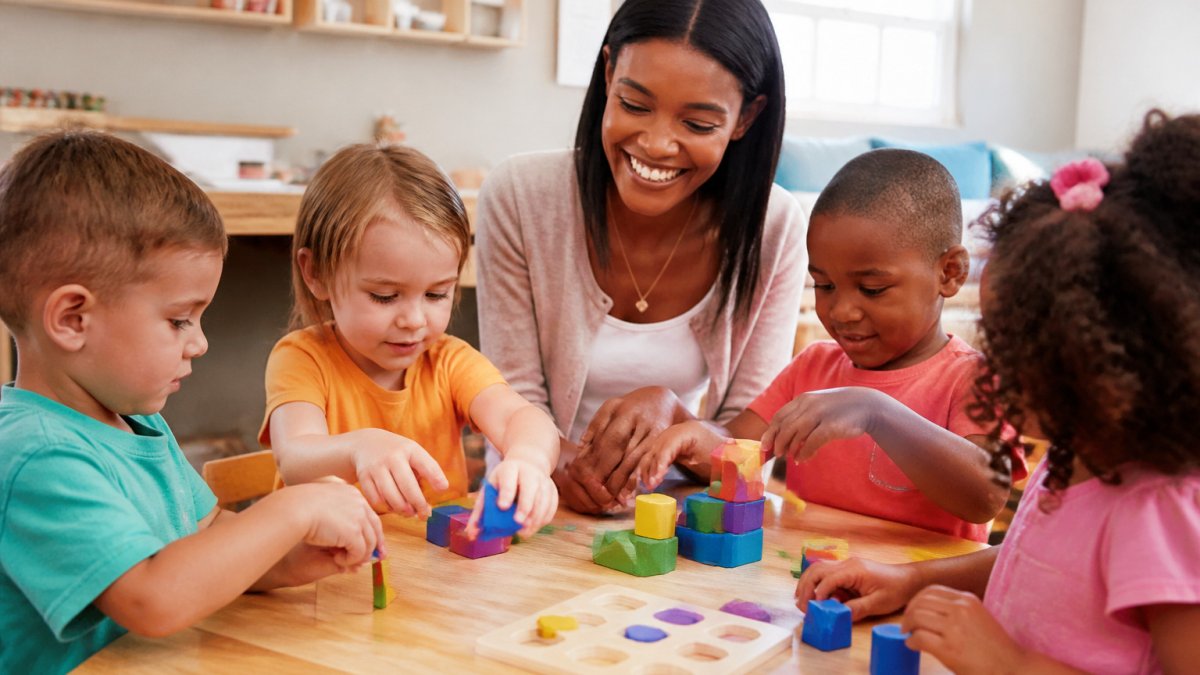
Pretend play helps toddlers practice language, empathy, and sequencing. A child feeding a stuffed animal is rehearsing the steps of a meal. Building projects with soft blocks or magnetic tiles teach spatial reasoning and early math concepts like height, balance, and number.
Toddler Social-Emotional Development Through Play
Play is one of the main settings where toddlers learn to share, take turns, and recognize feelings. Parallel play, where children play side by side without interacting, is normal at this age and is often the first step toward cooperative play.
Adults support this growth by naming emotions during play ("You're frustrated that the tower fell") and by modeling turn-taking with simple games. Children who feel safe to express frustration in a low-stakes activity usually handle bigger social challenges with more confidence.
Language Development Activities for Toddlers in Play
Language grows fastest through conversation during real activities. Narrate what your child is doing, expand on their single words ("Ball" becomes "Big red ball, roll it!"), and pause to give them time to respond.
Reading together, singing songs with hand motions, and playing "I spy" with household objects all build vocabulary and listening skills. Watch out: quizzing a toddler with questions they cannot yet answer can make them shut down. Commenting on what they are doing is usually more effective than testing.
Bringing Play-Based Learning at Home Into Your Daily Routine
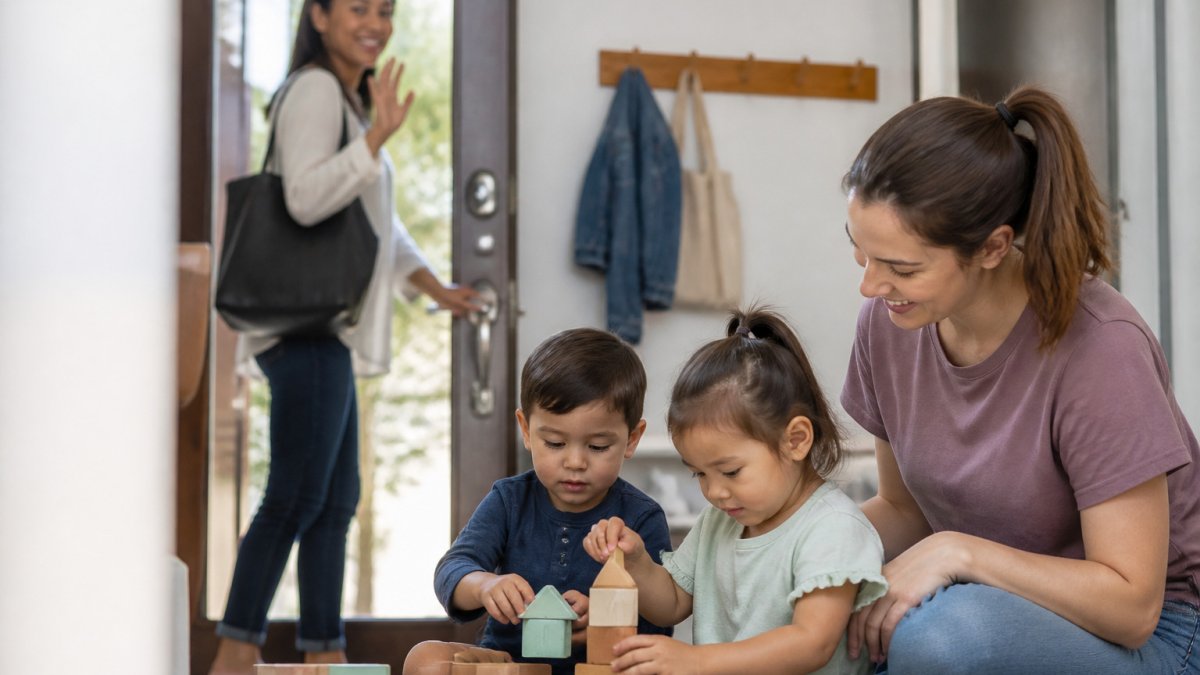
Play-based learning does not require a special room or expensive materials. Build small play moments into existing routines: a bath with cups and sponges, a walk where you collect leaves, or a few minutes of block play before dinner.
Rotate toys every week or two to keep interest high, and keep a basket of open-ended materials like cardboard boxes, scarves, and wooden spoons. These flexible items support more imaginative play than single-purpose toys.
Choosing a Play-Based Toddler Program in Lyndhurst
If you are looking for a program outside your home, ask how the day is structured, how much time is spent on child-chosen play, and how staff communicate with families. Strong programs can explain their daily routine and show you the materials children use.
Premier Kids Academy offers comprehensive care for children from 3 weeks to 14 years old, with staff trained and certified in CPR, First Aid, Communicable Diseases, and Child Abuse Prevention. Families considering options near Lyndhurst, OH can see the program details and schedule a visit or browse our blog for more local guidance on choosing care.
Frequently Asked Questions
What are the benefits of play-based learning for toddlers?
Play-based learning supports toddlers across several areas at once. Through hands-on exploration, children strengthen fine and gross motor skills, problem-solving, language, and social awareness. Play also builds self-esteem, since toddlers gain confidence when they make choices and see the results of their own actions. Because the learning feels natural and enjoyable, children tend to stay curious and engaged, which prepares them for the more structured learning they will meet in preschool and kindergarten.
How much time should toddlers spend in play-based learning?
Toddlers benefit most from long stretches of free and guided play spread throughout the day rather than a single block of activity. Many early childhood educators recommend building play into routines such as meals, transitions, and outdoor time, alongside a few focused activities. Watch your child's engagement: when attention wanders or frustration rises, shift to a calmer activity or a new material. Consistency across days matters more than hitting a specific number of minutes.
How can parents encourage play-based learning at home?
Start with everyday materials: blocks, containers, crayons, water, and simple household objects. Follow your toddler's interests, sit near them, and ask open questions like What do you think will happen? rather than directing the activity. Set up a small play space with easy access to supplies, rotate toys every week or two to keep things fresh, and resist the urge to correct every mistake. Your attention and patience are the most important parts of the setup.
What should parents look for in a play-based toddler program?
Look for classrooms where children have regular access to hands-on materials and choose much of their own play. Ask how teachers document progress and how often they share updates with families. Observe whether staff stay engaged with children, ask questions, and respond to individual interests. Check staff training and certifications, such as CPR and First Aid, and ask how the program handles safety and communication with parents.
Comments