


Simple Science Experiments for 2 Year Olds That Build Curiosity
Last Updated: November 9, 2026
Quick Summary
Simple science experiments for 2 year olds are short, hands-on activities using everyday household items that let toddlers explore cause and effect. Sink or float and magic milk each run in ten minutes or less, and water experiments need only a towel and constant adult supervision.
Fill a shallow tub halfway with water and gather five objects for sink or float.
In magic milk, dish soap breaks the surface tension so food coloring scatters outward.
A density jar layers honey, dish soap, water, and vegetable oil in a clear bottle.
Run one high-mess activity per week and fill the rest with low-mess options.
Keep a cleanup caddy with old towels, a spray bottle, paper towels, and a trash bag.
Ready to see hands-on learning in action?
Premier Kids Academy offers daily hands-on science and play for toddlers in a 5-star setting.
Table of Contents
Why Simple Science Experiments for 2 Year Olds Matter
Simple science experiments for 2 year olds are short, hands-on activities that let toddlers explore cause and effect using everyday household items. These moments can be built into a daily curriculum because they do more than entertain. They teach.
A toddler dropping a spoon into water is not just playing. That child is testing a prediction, watching a result, and adjusting the next move.
The barrier for most parents is not interest. For a wider look at how hands-on play builds thinking skills, see our breakdown of cognitive development activities for 2 year olds, and if you want the research-backed case for this style of learning, read the benefits of hands-on learning for toddlers.
Simple Science Experiments for 2 Year Olds at Home
Two experiments cover most of what a 2-year-old needs from science at home: sink or float, and magic milk. Both use items you already own, both run under ten minutes, and both survive a short attention span.

Sink or Float: The Five-Minute Setup
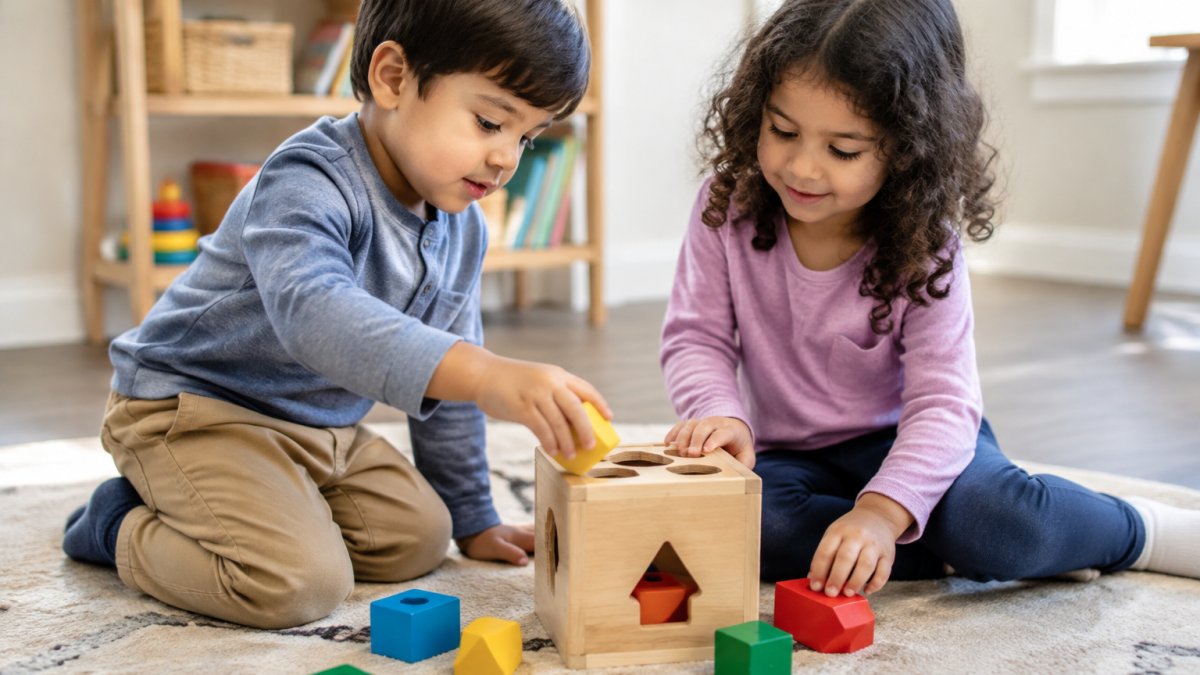
Fill a shallow plastic tub halfway with water. Gather five objects: a metal spoon, a plastic lid, a sponge, a wooden block, and a small ball.
That guess is the whole point. Prediction is the first step of the scientific method, scaled down to toddler size. Do not correct a wrong guess. Let the splash answer for you, then ask, "What happened?"
Magic Milk and Surface Tension
Pour a thin layer of milk into a shallow dish. Add one drop of food coloring in two or three spots. Dip a cotton swab in dish soap and touch it to the milk.
Surface tension holds the milk flat until the soap breaks it. Your toddler sees a chemical reaction without touching anything dangerous. Keep the dish on a tray and use washable food coloring.
Easy Water Experiments for Toddlers
Water is the best first material for science because it is free, safe, and endlessly repeatable. Easy water experiments for toddlers need no special equipment, just a towel underneath and a child within arm's reach.
Density Jars and Pouring Stations
A density jar shows that liquids stack in layers. Pour honey, then dish soap, then water, then vegetable oil into a clear bottle, slowly, down the side. Wait a minute between each.
A simpler alternative for younger toddlers is a pouring station: two cups, one pitcher, and a wide basin. Pouring builds fine motor control and volume awareness at the same time. Expect spills.
Color Mixing Activities for Toddlers
Color mixing activities for toddlers teach color theory through discovery rather than instruction. The goal is not to explain primary colors. The goal is to let your child see blue and yellow become green and feel the surprise of it. Most practitioners find that the surprise, not the vocabulary, is what makes a 2-year-old return to the activity a second and third time.
The Three-Cup Pour
Set out three clear cups with water tinted red, yellow, and blue, plus an empty fourth cup. Let your toddler pour two colors together and watch the change. Name the result out loud: "Red and blue made purple." Use one drop of washable food coloring per cup; more than that and the result looks muddy rather than bright. Keep the cups on a rimmed baking sheet so a tipped cup stays contained.
Watch out: using gel food coloring instead of liquid drops. Gel dissolves unevenly in cold water and can leave streaks that confuse the color change. Stir each cup before your child pours.
The Sealed-Bag Version (Low-Mess)
For a mess-free version, use two zipper bags with a spoonful of paint in each. Seal both, tape the edges, and let your child squish the bags on the floor. The color blends inside the plastic, and cleanup is one wipe. This is the version to choose when you are visiting family, waiting at a restaurant, or running the activity on carpet.
Color Mixing as a Developmental Milestone
Color mixing is not just art. It aligns with two-year-old milestones in cause and effect and fine motor control. A child who squeezes a bag, stirs a cup, or pinches a food-coloring dropper is building the same pincer grasp used later for holding a crayon. If you want to see how these small moments stack into larger skills, our article on play-based learning benefits for toddlers walks through what the evidence says.
When the Colors Do Not Mix
If the colors stay separate, the usual cause is too little soap or too cold water in a magic milk setup, or paint that is too thick in the bag version. Add one drop of dish soap and swirl the dish gently. If the bag version looks clumpy, knead the bag for ten seconds before handing it back. Fix the material, not the child.
Science Activities for Toddlers in Childcare
Science activities for toddlers in childcare follow the same principles as home experiments, with one addition: routine.
Repeating a small set of experiments in a classroom can build observation skills and confidence, since children get to lead the activity themselves once they are familiar with it.
Good childcare science also connects to the outdoors. Parents checking a center's safety standards can review child safety protocols in daycare centers before enrolling.
Keeping Toddler Science Safe and Mess Under Control
Safety comes down to three rules: supervise constantly, use non-toxic materials, and keep water shallow. A toddler can drown in two inches of water, so a tub on the floor still needs an adult kneeling beside it. Constant supervision is the standard advice around any water for children this age, and it applies to a baking-sheet pouring station just as much as to a bathtub.
Low-Mess vs. High-Mess: A Tier System
Parents of 2-year-olds fear the mess more than the science. Sorting experiments into two tiers lets you choose based on the day, the flooring, and how much energy you have.
Low-mess (under five minutes of cleanup):
Sealed color-mixing bags
Sink or float in a shallow tub on a rimmed baking sheet
A nature walk collecting leaves and stones in a bucket
High-mess (plan for a towel and a change of clothes):
Magic milk with liquid food coloring
Pouring stations with a full pitcher
Density jars with oil and honey
A common pattern is to run one high-mess activity per week and fill the rest of the week with low-mess options. That keeps the routine sustainable without turning your kitchen into a permanent science lab.
The Five-Minute Cleanup Kit
Keep a single caddy within arm's reach before you start: a stack of old towels, a spray bottle of water, a roll of paper towels, and a small trash bag. Put a rimmed baking sheet under every wet activity.
Watch out: letting a toddler pour from a full pitcher over a carpeted floor. Fill the pitcher one-third full and place the station on a hard surface.
Aligning Experiments with Two-Year-Old Milestones
Most articles treat toddler science as entertainment. It is more useful to map each experiment to a developmental milestone so you can see what your child is actually practicing.
Cause and effect: sink or float, magic milk, dancing raisins. Your child predicts, then watches the result.
Fine motor control: pouring stations, squeezing sealed bags, pinching a dropper. These build the pincer grasp.
Sorting and comparison: nature walks, collecting leaves and stones by size or color.
Language and vocabulary: naming colors, asking "what happened?", describing textures.
If an experiment does not line up with a milestone your child is working on, it is fine to skip it. The point is not to complete a list.
Sorting experiments into two tiers lets you choose based on the day, the flooring, and how much energy you have.
Tier | Cleanup | Experiments |
Low-mess | Under five minutes | Sealed color-mixing bags; sink or float in shallow tub |
Low-mess | Under five minutes | Nature walk collecting leaves and stones in a bucket |
Low-mess | Under five minutes | Dancing raisins in a clear cup of seltzer |
High-mess | Plan for a towel and change of clothes | Magic milk with liquid food coloring |
High-mess | Plan for a towel and change of clothes | Pouring stations with a full pitcher |
High-mess | Plan for a towel and change of clothes | Density jars with oil and honey |
High-mess | Plan for a towel and change of clothes | Any activity with paint, glitter, or cornstarch |
When an Experiment Flops: Troubleshooting and Local Resources
Most failed experiments fail for one of three reasons: the materials were wrong, the child was tired, or the adult expected too much. A density jar with cheap honey will not layer properly. A magic milk dish with cold milk reacts slowly. Fix the material, not the child.
If your toddler walks away after thirty seconds, that is not failure. Two-year-olds focus in short bursts. Try again another day with one fewer object.
Finding Hands-On Science in Your Child's Daily Care
The real test of any early childhood program is whether hands-on learning shows up on an ordinary Tuesday, not just at an open house. Ask to see a classroom mid-morning.
Premier Kids Academy offers a collegiate-based curriculum for children from 3 weeks to 14 years. Our staff are trained and certified in CPR, First Aid, Communicable Diseases, and Child Abuse Prevention, and we hold a 5-star center rating. Our programs also include gymnastics, soccer, and the Young Entrepreneur Program. Families can ask about door-to-door transportation and free half-day preschool for qualifying children.
If you want a care setting where your toddler's curiosity is treated as the start of a lesson, explore our programs and see which classroom fits your child's age and stage.
Your toddler does not need a kit or a curriculum to start exploring. They need ten minutes, a shallow tub of water, and an adult who lets them guess wrong.
Frequently Asked Questions
What are some simple science experiments for 2 year olds?
Start with sink or float using a tub of water and household items like corks, spoons, and toy ducks. Magic milk (milk, food coloring, and a cotton swab dipped in dish soap) shows color movement in seconds. A nature walk with a collection basket teaches observation. Each activity takes 5 to 10 minutes and uses items you already own, which keeps prep low and lets your toddler repeat the experiment as often as they want.
Are science experiments safe for 2-year-olds?
Yes, when you choose non-toxic materials and supervise closely. Skip anything small enough to swallow, avoid glass containers, and use taste-safe options like flour, water, and food coloring. Keep cleaning products and dish soap out of reach even during magic milk. A 2-year-old still mouths objects, so check every item against a toilet paper roll: if it fits inside, it is a choking risk and stays out of the bin.
How long should a science activity last for a 2-year-old?
Plan for 5 to 15 minutes of focused play. A 2-year-old usually engages in short bursts before moving on. Set up, let them explore, and follow their lead when they lose interest. Repeating the same activity across several days builds more learning than one long session, and short setups are easier to clean up.
What household items work for easy water experiments for toddlers?
You need a plastic tub or baking dish, water, and safe objects: corks, plastic lids, sponges, metal spoons, toy boats, and measuring cups. Add food coloring and oil for a density jar, or dish soap for bubble play. A turkey baster and a funnel build fine motor skills while moving water between cups. Everything rinses clean, and the whole setup costs nothing beyond what is already in your kitchen.
Comments