


Can Academic Preschools Improve School Readiness?
Quick Summary
Academic preschools can help children build skills that matter for kindergarten, such as early literacy, early math, focus during group activities, and social-emotional growth. However, program quality matters more than the label. Parents should check the daily schedule, how teachers track progress, and how families receive updates.
Kindergarten readiness includes focus, following directions, taking turns, and early literacy and math skills.
Academic preschools use short, structured lessons with clear learning goals built on each other.
The strongest programs combine structured lessons with play rather than relying on one approach alone.
Ask how teachers measure growth and whether families get daily notes or weekly reports.
Developmental delays in speech, movement, or attention should be discussed with a pediatrician early.
Table of Contents
Can academic preschools actually help children arrive at kindergarten ready to learn? Parents in Lyndhurst, Ohio ask this question often, and it deserves a straight answer. The short version: academic preschools can build skills that matter for school, but the quality of the program matters more than the label on the door. This guide explains what those skills are and how to judge any program you consider.
School readiness is a set of skills, not a single test score. Those skills include early literacy, early math, social-emotional growth, and the ability to focus during a group activity. The goal is to help parents see what to look for so they can make a clear choice.
What School Readiness Actually Means for Preschoolers
School readiness is the ability to meet the everyday demands of a kindergarten classroom. A child needs to listen during group time, follow simple directions, handle frustration, and take turns. Strong reading and counting skills help too, but they are only part of the picture.
Many parents assume readiness means knowing letters and numbers. In practice, teachers often value self-control and curiosity just as much. Watch for these signs when you evaluate any preschool:
The child can sit and focus for short group lessons
The child can share materials and wait for a turn
The child asks questions and tries new tasks
The child can use words to describe a problem
Developmental delays can make these skills harder to build. If you notice persistent difficulty with speech, movement, or attention, talk with your pediatrician early. Our guide to early signs of developmental delays in toddlers lists what to watch for. Early support often makes a real difference.
How Academic Preschools Build Kindergarten Readiness Skills
An academic preschool plans lessons around specific learning goals. Teachers use short, structured activities that build on each other. A typical day might include a phonics game, a counting activity with blocks, and a story followed by a discussion.

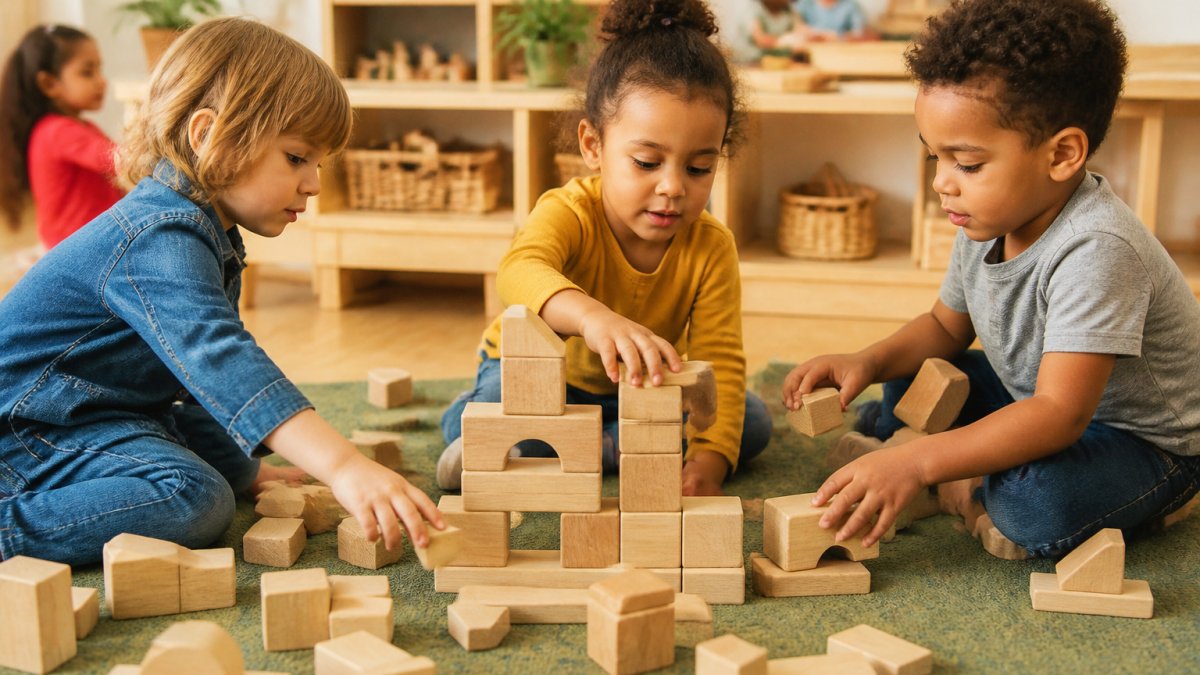
A child who stacks blocks to count them is practicing number sense.
When you tour a program, ask how teachers measure growth. Look for clear answers about goals, check-ins, and how families receive updates. Strong programs can explain their approach in plain language.
The article describes how academic preschools structure their days and how families can ask about progress tracking.
Question to ask | What to look for | Why it matters |
Daily schedule | Amount of structured lesson time | Shows how much learning is planned |
Progress tracking | Clear goals and check-ins | Shows how growth is measured |
Teacher training | CPR and First Aid certification | Confirms staff safety preparation |
Family updates | Daily notes or weekly reports | Keeps parents informed |
Preschool vs. Play-Based Learning: What the Evidence Shows
Parents often wonder whether an academic approach is better than a play-based one. The honest answer is that both have strengths. Play builds creativity, problem-solving, and social skills. Structured lessons build early reading and math habits.
The strongest programs combine both. Play gives children room to explore, while guided lessons add direction. Look for a schedule that includes free play, small-group teaching, and time for children to talk about what they learned. Be cautious of any program that promises results without describing how it teaches.
Early Literacy Activities for Preschoolers in Academic Programs
Early literacy is one of the strongest predictors of later reading success (Resource roundup: Supporting early literacy development). Simple activities help children build the foundation they need:
Reading aloud daily and pointing to words as you read
Singing rhyming songs to build sound awareness
Matching letters to sounds in fun games
Writing a child's name and letting them copy it
Children who hear many words each day tend to build larger vocabularies. Ask any preschool how it builds vocabulary during the day, not only at reading time.
Social-Emotional Development in Preschool and Why It Matters
Social-emotional skills help children manage feelings, make friends, and handle change. A child who can name a feeling is better able to calm down when upset. These skills also support learning, because a child who feels safe is more willing to try new things.
Encourage habits like talking about feelings, modeling patience, and letting your child solve small problems at home.
How to Choose an Academic Preschool in Lyndhurst
Choosing a preschool in Lyndhurst takes some careful comparison. Use this checklist when you visit any center:
Ask about the daily schedule and how much time includes structured lessons
Ask how teachers track each child's progress
Ask about teacher training, including CPR and First Aid certification
Ask how families receive updates, such as daily notes or weekly reports
Ask about safety procedures and how staff respond to conflicts
Ask whether the program fits your work schedule and transportation needs
Compare several options before you decide. The right fit depends on your child's temperament and your family's needs. Trust what you see during a visit as much as what the brochure says.
Booking a Tour at Premier Kids Academy
A visit is the best way to judge whether a program fits your child. Bring your child's questions and your own, and take time to observe how children and teachers interact.
Ready to learn more? You can also review our academic preschool program.
Frequently Asked Questions
Can academic preschools improve school readiness?
Parents can look at the whole learning environment, not just the academic label, when considering whether a program may help their child prepare for kindergarten.
What does school readiness mean for preschoolers?
School readiness generally covers several areas: early academic skills such as letter and number recognition, language and vocabulary, self-regulation, attention, following directions, and getting along with peers. Kindergarten teachers typically look for children who can sit through group activities, communicate their needs, and handle routines. A strong preschool program supports all of these areas rather than focusing on one skill set alone.
Is an academic preschool better than a play-based preschool?
Neither approach is automatically better. The right choice depends on your child's temperament and learning style.
What should parents look for in a high-quality preschool?
Ask about the program's current pricing and enrollment details directly from Premier Kids Academy.
Our teachers are happy to answer your questions about readiness, curriculum, and schedules. Contact Premier Kids Academy to start the conversation about your child's next step.

Comments